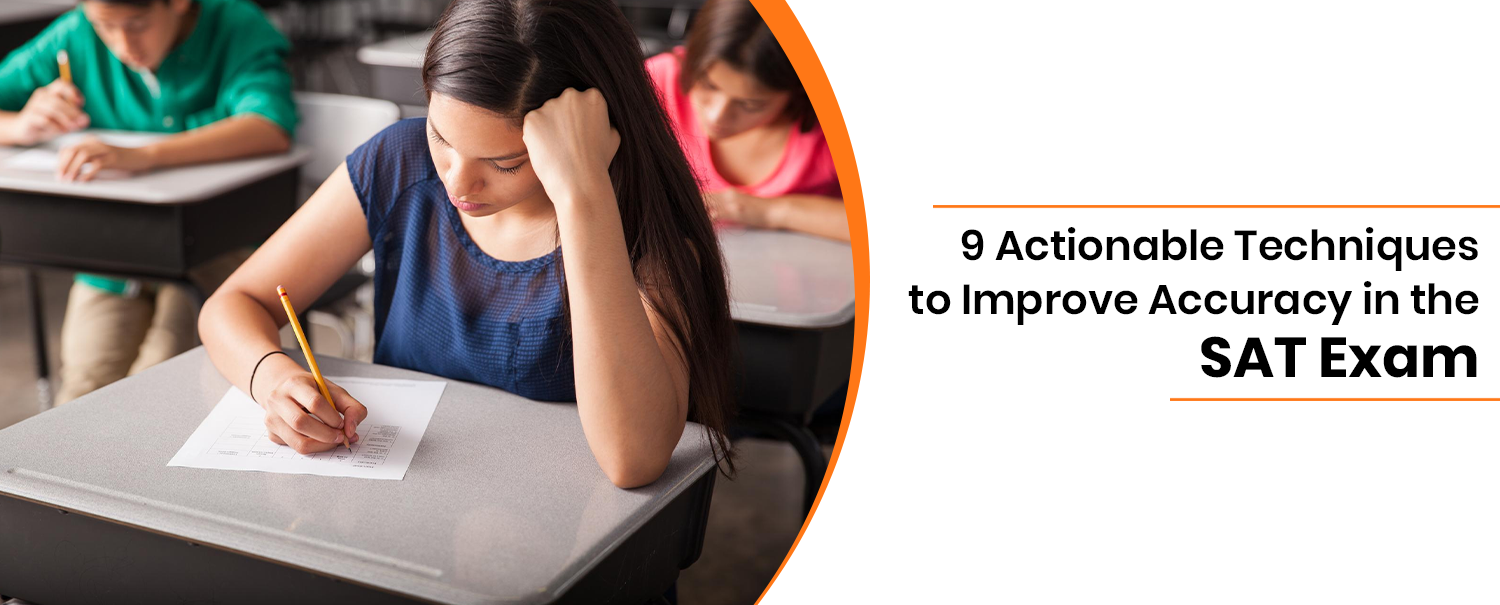
Something is frustrating about the SAT that most students don’t talk about openly. You can prepare for weeks, understand the concepts, solve practice questions, and still lose marks in places that don’t make sense later.
Not because the question was difficult. But because something small slipped.
I’ve seen students lose points for skipping a word in the question. Or because they assumed they understood it without reading fully. Or simply because they were trying to go faster than they should.
This is where accuracy becomes important during SAT prep. It’s not about knowing more all the time. Sometimes, it’s about making fewer unnecessary mistakes while attempting what you already know.
Why Accuracy Is the Real Score Booster
If you compare the answer sheets of two students who studied the same topics, the difference is often not in knowledge. It’s control.
One student stays consistent and reads carefully. The other rushes slightly, second-guesses, or loses focus midway. Over the course of an entire test, those small differences add up.
The tricky part is that these errors don’t feel obvious while solving. They only become clear later, when you review and realize, “I actually knew this.” That realization is important because it shows the problem is fixable.
1. Turn Mistakes Into Measurable Data
Most students check answers and move on. That’s where improvement usually stops.
If you slow down after a test and look at why something went wrong, things start to make more sense. You begin to notice patterns that were not visible before.
Some common ones look like this:
- You rush through easier questions and miss simple steps
- You misread long questions, especially in reading sections
- You guess when time feels tight, even if you could solve it
- You get stuck on one question longer than needed
When you write these down regularly, they stop being random mistakes. They become predictable habits. And once something is predictable, it’s easier to fix.
This is something most SAT prep tips don’t really go deep into. They tell you to practice more, but not how to observe yourself while practicing.
2. Adjust Your Pace, Not Just Your Speed
Trying to go faster sounds like a good idea until it starts costing marks. A lot of students think finishing early gives them an advantage. But what usually happens is they make small mistakes and either don’t notice them or don’t have enough time to fix them properly.
Working at a steady pace may feel slower at first. But it reduces confusion. You spend less time going back and correcting things. Over time, your flow improves without forcing speed.
3. Apply the Two-Pass Strategy
Not every question deserves your attention at the same moment. This is something many students realize too late. When you try to solve everything in order, one difficult question can break your rhythm. It slows you down and affects your focus for the next few questions.
A simple adjustment helps here. In your first pass, solve what feels manageable. If something feels unclear, leave it and move forward. Then come back to it later.
Among different SAT exam preparation tips, this one feels practical because it reduces pressure in real time, not just in theory.
4. Train Yourself to Read Questions Precisely
A lot of errors don’t come from not knowing the answer. They come from reading the question slightly wrong. Words like “except” or “least likely” are easy to miss when you’re moving quickly. But they completely change what you’re supposed to do.
Taking a short pause after reading the question helps. Not a long pause, just enough to register what is being asked. Some students mentally repeat the question in simpler words. That alone can reduce a surprising number of mistakes.
5. Simulate the Real Test Environment
Practicing casually and sitting in the actual test are two very different experiences. At home, you’re relaxed. In the exam, you’re aware of time, surroundings, and pressure. That affects how you think.
The right SAT study schedule needs practice tests that simulate actual test conditions. Stay focused in one place without distractions, and stick to the time limits. At first, this might seem awkward, but that’s the idea. The more familiar the pressure feels, the less it affects your accuracy later.
6. Strengthen Your Elimination Skills
There will always be questions where you’re not completely sure. That doesn’t mean you’re stuck.
Instead of searching for the perfect answer immediately, try removing options that clearly don’t fit. Even reducing four options to two changes your chances significantly.
This is especially important for the reading section of the test, where the right answer may be deliberately misleading. This helps narrow down the wrong choices and increase your chances of success.
7. Prioritize Weak Areas Strategically
We like to work on what we’re good at. It makes you feel like you’re doing something, and you get immediate results. But it doesn’t actually raise your score.
When you start working on the areas where you make mistakes, that’s when the change occurs. It may seem a little slower and a bit frustrating, but this is how you improve.
If you’re figuring out how to study for the SAT, it’s important to prioritise the weaker areas. Once you improve in those areas, you’re more likely to feel like your study is on track.
8. Review Correct Answers With Intention
Getting an answer right doesn’t always mean your method was solid. Sometimes it’s a guess. Sometimes it’s a longer approach that worked once but may not work again under pressure.
When reviewing, take a second look at the correct answers too. Ask yourself if your method was clear and repeatable. If there’s a simpler way, note it. This builds consistency over time.
9. Manage Stress to Protect Accuracy
Even well-prepared students can lose marks when they feel overwhelmed. Stress doesn’t always look dramatic. Sometimes it’s just a slight rush, a small panic when time feels short, or a feeling of being stuck.
If that happens, it’s better to move on and return later. That small reset helps more than forcing your way through a question. Staying calm doesn’t just feel better—it actually improves how you think.
A Different Way to Measure Progress
Most students measure preparation in hours. But that doesn’t always show real improvement. A better way is to notice how your mistakes change over time. Are they repeating, or are they reducing? Are you making the same kind of errors, or different ones?
When you combine this mindset with a consistent SAT study plan, progress becomes more visible. You start trusting your process, not just your effort.
Final Thoughts
Accuracy doesn’t get as much attention as it should, even though it directly affects your score. Once you begin noticing your patterns and adjusting your approach, things start to feel more controlled.
A focused approach to SAT prep, along with support from Smart Math Tutoring, helps you make your preparation more practical and effective. When small mistakes are reduced, your score starts reflecting what you already know—and that’s where real improvement shows up.