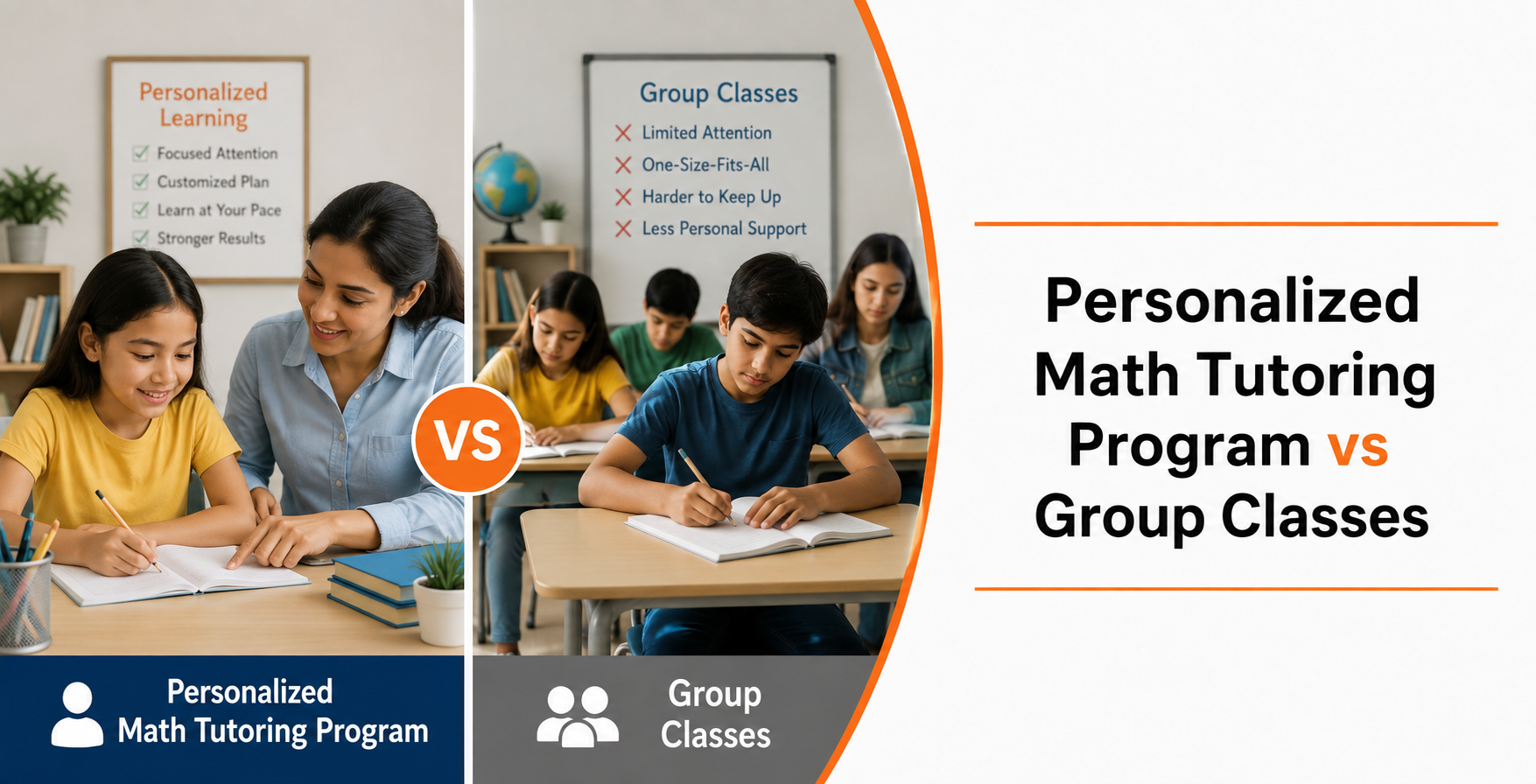
Choosing the right way to learn math can make schoolwork feel much easier. Group classes let students learn with other children, while private tutoring gives one student more time with a tutor. Both can help with math, but they work in different ways. The better choice depends on what the student finds difficult and how much support they need.
A Personalized Math Tutoring Program gives a student lessons that match their own level. The tutor can see which math skills need more work and spend time on those areas. If a student understands one topic quickly, the tutor can move to the next one instead of repeating work they already know.
Parents often compare these two choices when a child needs extra math help. The main question is simple. Does the student need individual help, or can they learn well while following a group lesson?
Learning Pace Creates a Clear Difference
Children do not all learn math at the same speed. One child may understand fractions after a few examples. Another child may need more time and more practice.
In personalized tutoring, the tutor can slow down when a topic is hard. The student can work through more examples before moving on. If the topic is easy, the lesson can move ahead.
Group classes usually have a set pace. The teacher needs to keep the lesson moving for everyone. This can be helpful for students who can keep up with the class.
Individual Attention Affects Math Progress
A student can ask a tutor a question whenever something is unclear. The tutor can then explain the problem in another way. This can be helpful when a child keeps making the same mistake.
In a group class, the teacher has several students to help. A child may need to wait before getting an answer. The teacher also has to give enough time to the other students.
Group classes still have a useful benefit. Children can listen to their classmates and see how they solve a problem. Sometimes another student’s question can help everyone understand the lesson better.
Math Practice Works Differently in Each Setting
Math gets easier with practice. Students need to solve problems more than once to remember the steps.
Personalized tutoring can give a student more practice with the areas they find hard. For example, a child may know multiplication but struggle with fractions. The tutor can spend more time on fractions until the steps become clearer.
A Math Practice Program can also help children build a regular practice habit. Students can work on different types of problems and learn from their mistakes.
In group classes, practice is usually based on the lesson being taught that day. Every student may work on similar questions even when their skill levels are different.
Schoolwork Support Depends on the Learning Format
School homework can show parents where a child needs help. A tutor can use that homework to explain a topic the student does not understand.
Imagine a child is learning area and perimeter in school. They may know how to add numbers but still mix up the two formulas. A tutor can use a simple rectangle and show how each answer is found.
Math Tutoring Classes can also help students with school topics. The difference is that a group class may be working on another topic when the student needs help with homework.
Test Preparation Can Vary Between the Two
Tests can be stressful when students are not sure which topics they understand. Personalized tutoring can focus on the areas where the student is making mistakes.
For example, a student may feel fine with simple equations but struggle with word problems. The tutor can spend more time reading the question, finding the important information, and solving it step by step.
Group classes can also include test practice. The teacher may review the topics that are expected on the test. However, there may be less time to work on one student’s specific mistakes.
Peer Learning Adds a Different Experience
Group classes give children a chance to learn with other students. They can hear different answers and watch how classmates solve problems.
This can make the classroom feel active. A student may also feel better when they see that other children make mistakes too.
Personalized tutoring is quieter and more focused. The student works directly with the tutor and can spend more time on areas that need attention.
Neither option is right for every child. Some students enjoy working with others, while some learn better when they have the tutor’s full attention.
Flexibility Can Change the Learning Experience
A child’s math needs can change during the school year. A student may be doing well in one month and then need help with a new topic later.
Personalized tutoring can change with those needs. If a school test is coming up, the lesson can focus on the topics that will appear on the test.
Group classes usually follow a planned lesson schedule. This gives students a steady routine, but there may be less room to adjust the lesson for an individual child.
The Main Differences or Comparison
| Feature | Personalized Math Tutoring Program | Group Classes |
| Lesson pace | Matches one student’s level | Follows the group |
| Teacher attention | Focused on one student | Shared with the class |
| Practice | Based on areas that need work | Based on the class lesson |
| Homework help | Can focus on current homework | Depends on the lesson plan |
| Test preparation | Can target difficult topics | Usually covers class topics |
| Peer learning | Limited | Students learn with classmates |
| Flexibility | Lessons can change as needed | Follows a set schedule |
| Learning gaps | Can be worked on directly | May need extra practice |
| Lesson difficulty | Can change for the student | Usually follows the group level |
| Best suited for | Students who need focused help | Students who enjoy group learning |
Learning Gaps Can Affect the Better Choice
Math topics often connect. A child who struggles with multiplication may later have trouble with fractions. Fractions are then used when students learn decimals, percentages, and other math topics.
This is why small gaps can become bigger problems. A student may know part of a lesson but still feel lost when a new topic builds on it.
Personalized tutoring can give more time to address these gaps. The tutor can go back to an earlier skill and practice it before moving to the next level.
Study Routines Can Shape Student Success
A regular math routine can help children stay on track. Group classes give students a set time for learning and practice. This can be useful for children who like knowing when their math lesson will happen.
Personalized tutoring can also become part of a weekly routine. The difference is that the lesson can change based on the student’s progress.
For example, one week may focus on fractions. The next week may focus on decimals if the student is ready. This keeps the practice connected to what the child needs at that time.
Student Needs Should Guide the Final Choice
Every child learns differently. Some students are happy to learn with classmates and can keep up with the class. Others need more time to understand a topic.
A child who often asks for extra help may benefit from individual tutoring. This can give them a comfortable place to ask questions and work through difficult problems.
Parents should also think about the reason for getting extra math help. Is the child struggling with one topic? Do they need regular practice? Are they preparing for a test? The answers can help guide the choice.
Personalized and Group Learning Serve Different Goals
A math tutoring program can support students who need regular help with school math. Group classes can provide a shared learning space where students work with their classmates. Personalized tutoring can give more attention to one student’s skills.
For example, a student may understand addition and subtraction but struggle with word problems. A tutor can spend time helping the student understand what the question is asking before working out the answer.
The right choice should match the student’s current needs. It should also give the child enough time to practice and ask questions.
Conclusion
A Personalized Math Tutoring Program and group classes can both help children become better at math. Group classes offer a chance to learn with other students and follow a regular lesson plan. Personalized tutoring gives one student more attention and allows lessons to move at a pace that feels comfortable.
For children who need help with specific topics, regular practice, or school homework, personalized tutoring can be a useful choice. Students who enjoy learning with classmates and can follow the group pace may feel more comfortable in a group class.
The right math tutoring program should make math easier to understand and give students time to practice what they learn. A clear plan, regular practice, and the right level of support can help children feel more comfortable with math.